

Walking Makes You More Creative
Saunter into your best work

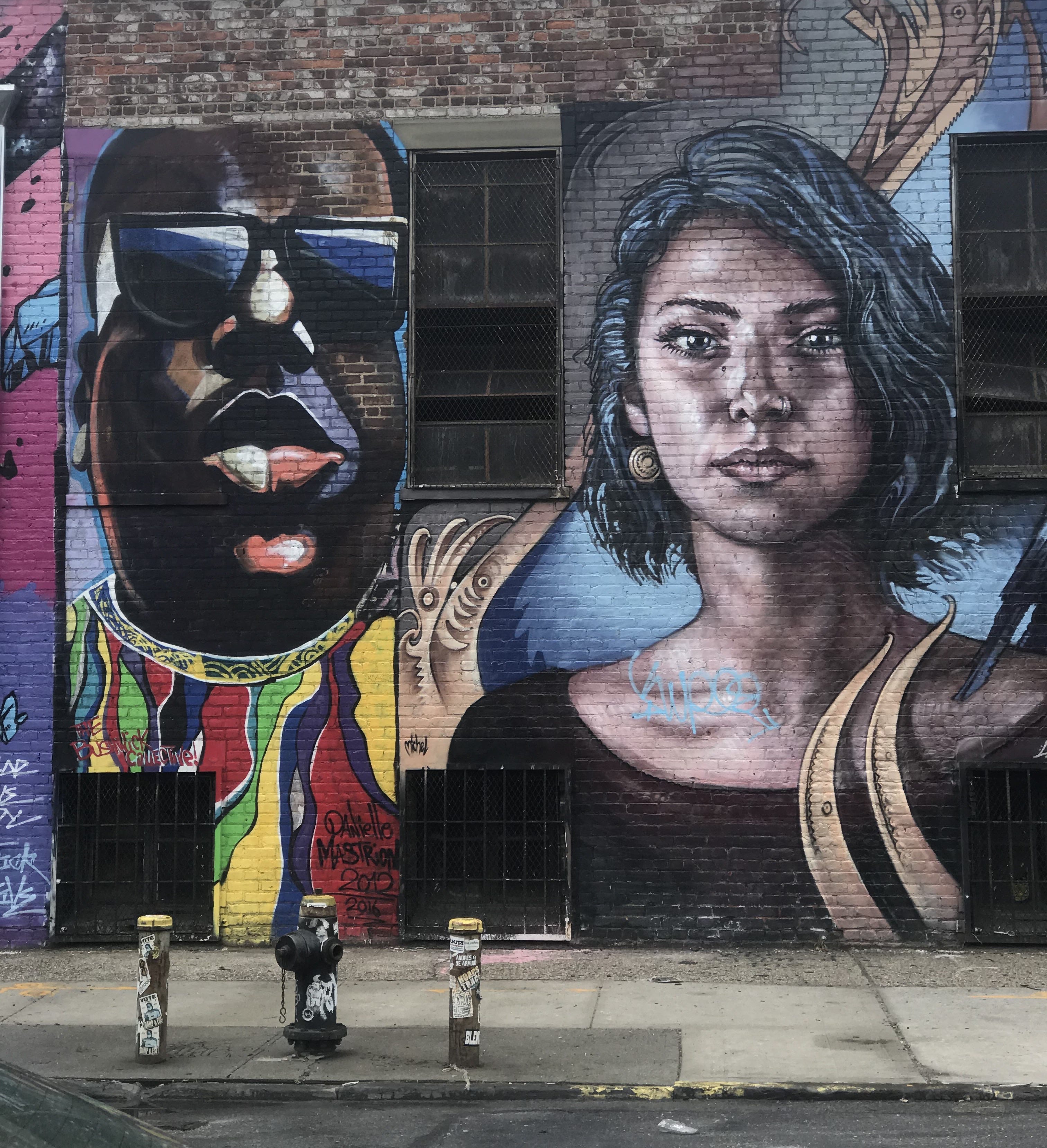
In the late spring of 2018, I spent a month living in a loft in Bushwick, Brooklyn—an area that began as a Dutch farming settlement in the 1600s (Boswijck) before blossoming into a major industrial immigrant neighborhood in the 19th century. As industrialization eventually declined, the neighborhood became associated with graffiti culture, warehouses, and a burgeoning artist scene. I briefly moved into one of those warehouses—a short stint between living in Paris and a few weeks in London—as a trial run (I later moved there). It was a bright, airy, open-plan space in sharp contrast to the dingy graffiti-laden walls and windows of the building entrance (where packages were frequently stolen).
My days were simple and routine: I’d stumble from bed into the shower, walk to the now-defunct AP Café, and order a black Americano to start my morning. I’d sit on the bench in the sun outside the shop window as my brain came online, then walk the gritty sidewalks for around an hour. Most days I’d pick up an exorbitantly priced avocado from Hana Natural and head back home for breakfast: avocado toast topped with alfalfa sprouts (guess which generation I belong to). Then I’d get to work.
I fondly remember this season as one of my most creative—something about this formula cracked the code to my creative output.

There have been a handful of studies exploring the link between walking and creativity, perhaps most notably this research report.
The study was built around a simple premise: that creative thinking might be improved not through training, but through movement. As the authors note, “Attempts to improve individual creativity often involve training people in the steps of creativity including shifting perspective, trying something counterintuitive, or, in the most direct fashion possible, simply trying to “be more creative”. While effective, these depend on diligence and the direct, perhaps effortful, manipulation of one's creative processes.” Rather than focusing on those approaches, they explored whether walking itself could enhance creative output.
After an initial experiment, Oppezzo and Schwartz found that creative output increased by roughly 60% following a walk. Three subsequent experiments tested whether the effect persisted across different conditions—walking indoors versus outdoors, on a treadmill versus outside, combinations of walking and sitting—ultimately concluding not only that walking increased creativity, but that the residual effects extend beyond the time of the walk itself: “After people walked, their subsequent seated creativity was much higher than those who had not walked”.
While both walking on a treadmill and walking outdoors more or less achieved the same thing, they did conclude that walking outdoors “produced the most novel and highest quality analogies”—an effect that could not be explained by outdoor exposure alone (participants who were outside but not walking performed worse than those who walked, suggesting that walking itself plays an independent role in enhancing creativity). Perhaps most interesting is that the effect lingers after the walk has ended.
Is it really that simple? Oppezzo and Schwartz believed it might be. If the goal is to generate new ideas, their research suggests that a walk beforehand may be worthwhile. They go on to suggest broader implications, arguing that “when there is a premium on germinating new ideas in the workday, it should be beneficial to incorporate walks… the neglect of the body in favor of the mind ignores their tight interdependence, as demonstrated here.”
Often, we think of creative work as pure mental activity. After all, ideas originate in the mind. But the question here is not simply how ideas are generated—it is how more ideas, and better ones, are generated. If the findings hold, the prescription is almost absurdly simple: go for a walk. The barrier to entry could hardly be lower—few creative practices demand less of us.
Anecdotally, it’s a theory that I have accidentally tested on more than one occasion—any time I incorporate walking into my creative practice, I notice greater clarity, increased productivity, and—perhaps most importantly—better work.
Last winter I unknowingly repeated this experiment once more—not as an intentional creativity-booster, but as a byproduct of wanting to get more movement in during the colder months. The only time I could reliably do so was first thing in the morning, while the kids were still asleep, before I began my workday (I have a fixed two-hour slot that I commit to every morning before the chaos gets going). Every day I’d go straight from bed to my walking pad—in my studio, while it was still dark—and get about 30 minutes in. After that, I’d make myself a coffee and go straight to my desk. The result was three pieces I’m especially proud of, fleshed out in their entirety, which are now ready to be mastered and released to the world.
Needless to say, I’m going to be a bit more intentional about folding walking into my daily creative rhythms. Any time walks and work have coincided in the past, it has been entirely unintentional—but hacking my way into my next great work seems like a good reason to start pairing them up.
On Creative Process explores creativity, artistic practice, and the daily rhythms that shape creative work. Subscribe for essays from a working musician.
Always a great read.
Solvitur ambulando. I have this above my desk, though it must be more than thirty degrees.
As a daily walker, I’m delighted to learn how beneficial it is to the creative process. And that research confirms the benefits is an added bonus. Thx for sharing this and keep on walking.